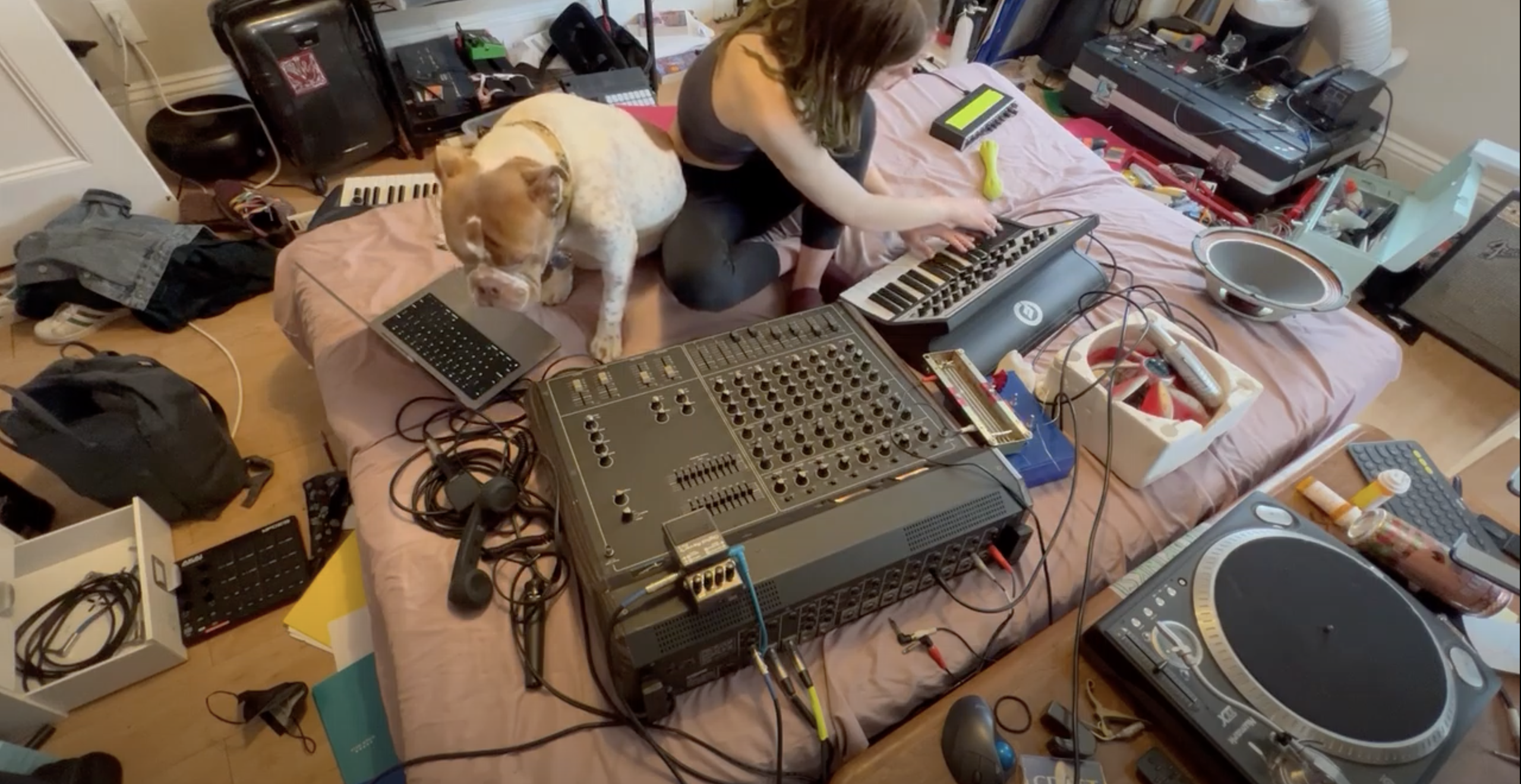
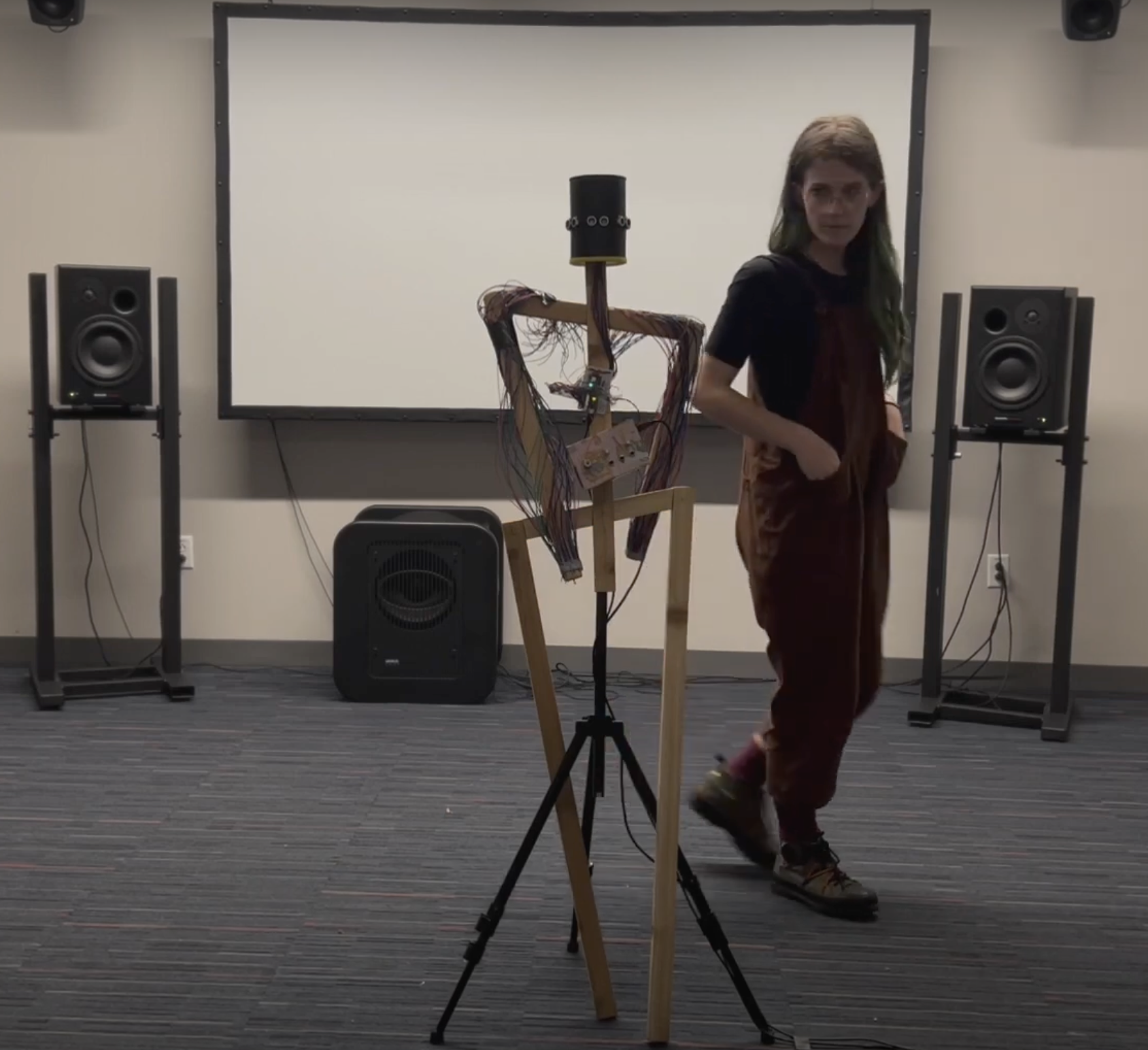
Natalie Epstein-Hogue is an interdisciplinary musician, artist, and technologist. Her work engages with urbanism, domesticity, and humanism within tech. Through electronic mediums, Natalie seeks to reflect the human experience. She works with expressive control and programming bespoke digital instruments, building up a deeply personal sound-space from first principles.
Her 2024 Album Comfort Objects is a synthesis-driven work, seeking to cultivate a soundscape of comfort and healing, in spite of a tumultuous and traumatizing reality. Dealing with themes of grief, PTSD and marginalization, and squaring them with a desire to create beautiful things, to love deeply, and to cultivate peace as a radical act.
Comfort Objects explores “Hyper Consonance” as a tonal palette. Inspired by composers like Ben Johnston and Marc Sabat, Natalie uses harmonic spectra and fractional harmony to create novel textures that are resonant and resolved; the sonic equivalent of a warm blanket.
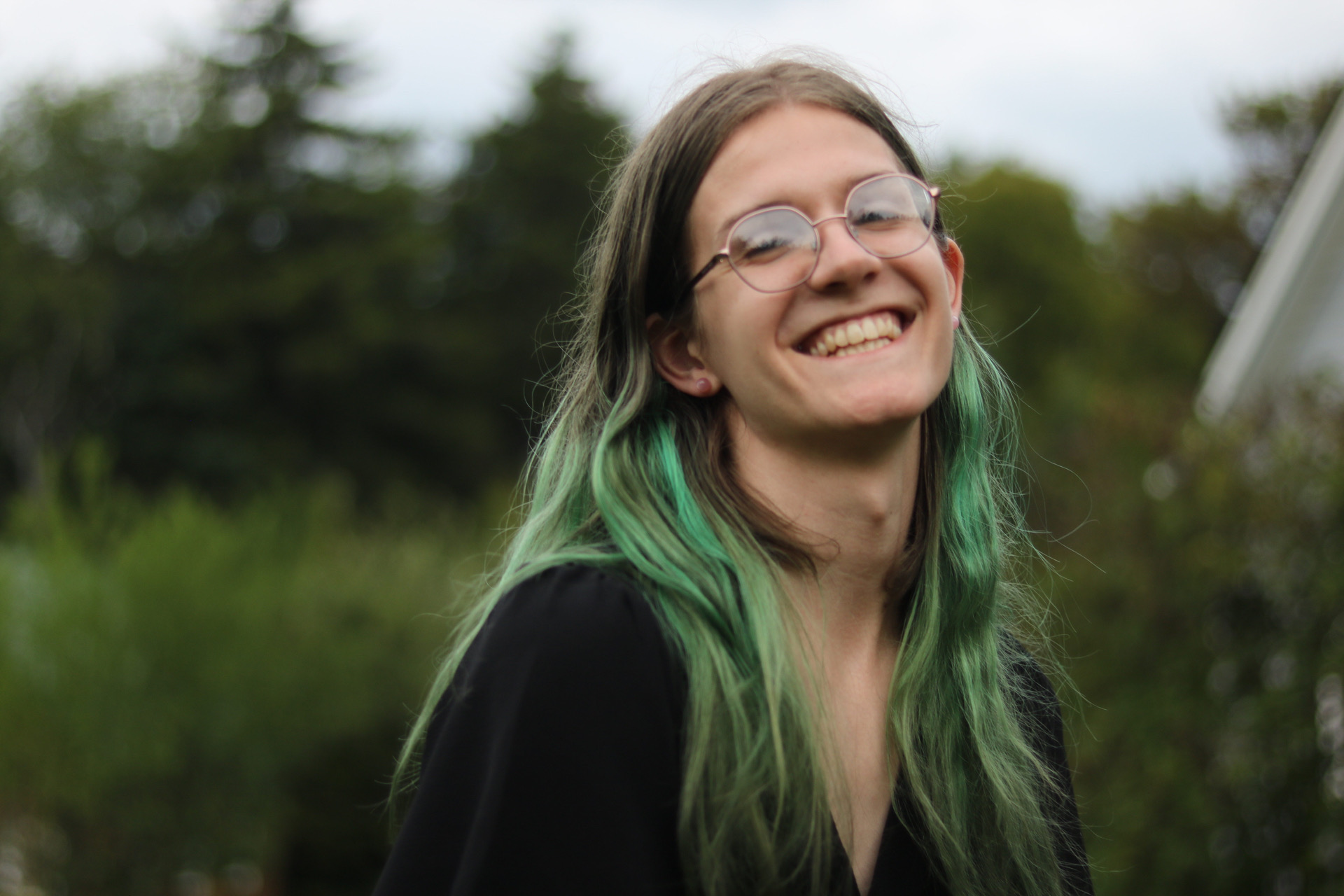
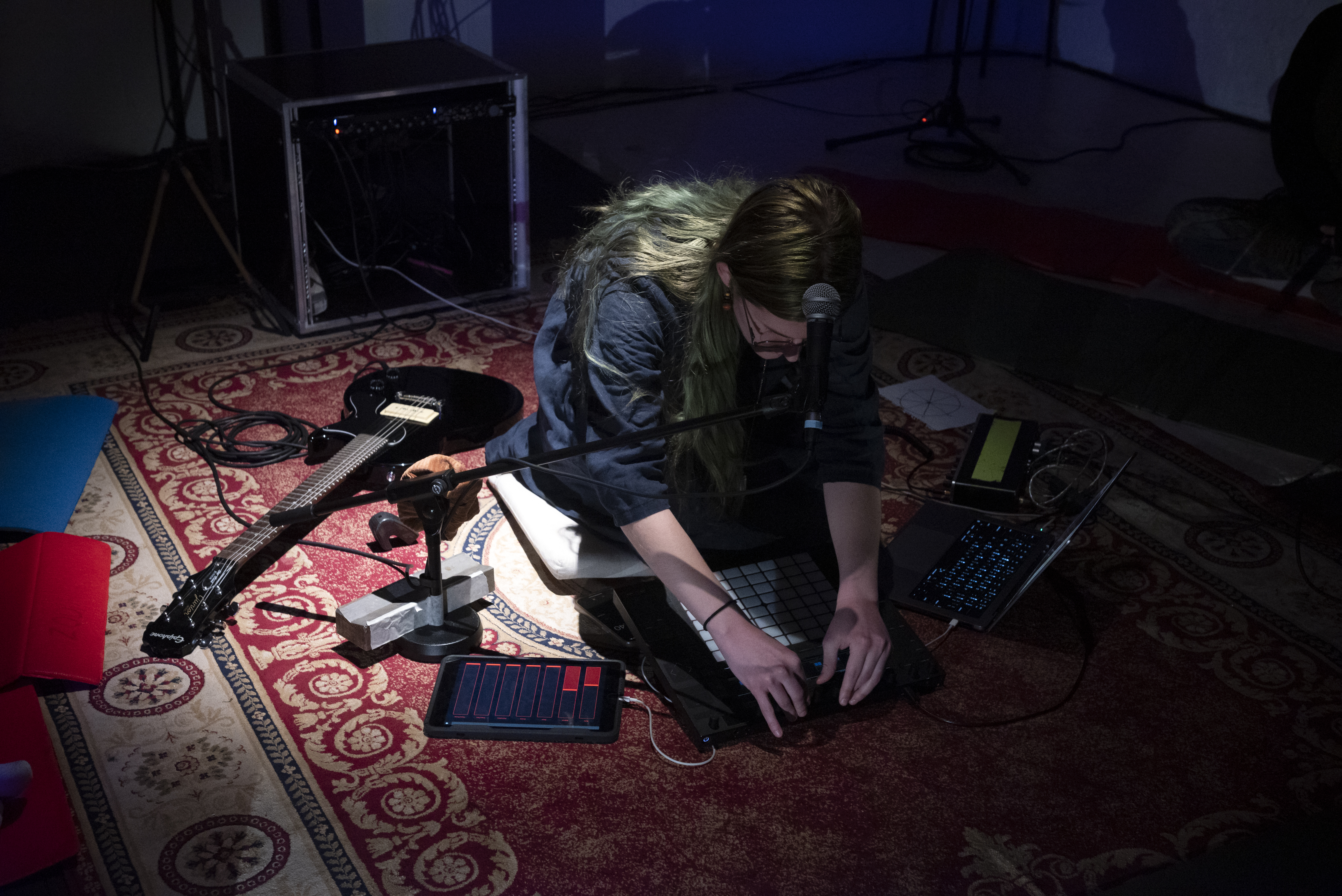
Non-Event and the Mayor's Office of Arts + Culture, are pleased to present a
free concert of live electronic music by Robert Aiki Aubrey Lowe
and Natalie Epstein-Hogue inside Boston's iconic City Hall
winedark by rosewither and Natalie Hogue is a collaborative effort which
explores the dualities between harmony and disorder. A resonant chorus of
tornado sirens, lawnmowers, and car horns, winedark explores nature in both
its violent and serene states; nature as something revered and beyond
control; nature of the world and of the human.
winedark is a pretty on-the-nose Homeric reference, and that's intentional.
While these pieces were coming together I was reading the Odyssey and found
myself identifying heavily with Penelope. The aching grief she felt even 30
years after losing Odysseus. That really resonated with me with all the loss
I've had over the last 5 years.
There's something so profound about reaching back thousands of years to
find the same emotions you're feeling now. This thing that feels so
unrelatable and unbearable--grief processing--is such a cornerstone of
human experience we've been telling stories about it as long as we've
known how.
Writing the record was lot of rose and I hanging out on discord and
listening to eachother. We'd be hanging out after work or something and she
was messing with Plastic Neptune (a working title we just ended up going
with). I asked her if she could send me a bounce to mess with, I recorded
the synth horns, bounced and sent back to her, and all in the span of like
20-30 minutes this song I was listening to her build on a discord call
suddenly has horns. As much as this work is about reaching back in time to
these deeply human feelings. I think it's also about reaching across
geographic distance with technology to engage human connection.
Comfort Objects is a tableau of my work, practice, and life as I've entered adulthood
My twenties have dealt me hardship and little else.
I've been chest-deep in grief, marginalization and health issues
Amidst this, Comfort Objects was a project meant to provide myself some solace
through creating music that can provide me with a calming and safe soundscape.
Something more substantial than generic chill-out mixes, I wanted to create something
which scratches my particular itch.
One major effort of this work is the concept of "hyper-consonance". I'm greatly inspired
by the just intonation work of composers like Ben Johnston and Marc Sabat.
I had the privilege of attending lectures with Sabat in 2023, where he introduced me to
the concept of primodality, which spun my understanding of just-intonation on its head.
Through this project I wanted to create music that's more in-tune than in-tune, and to create novel-consonances:
chords and ratios that don't exist within the 12 tone paradigm, but still create their own resonant,
resolved sound. I sought to create the sonic equivalent of a blanket fresh from the dryer.
Another effort of Comfort Objects was to showcase my synthesizer work to this point
The record features several bespoke models that I wrote in platforms such as
SuperCollider and MaxMSP. The organ on "Fugue on a Fire Alarm" and "Queer Doxology for Synth Organ"
is one of these models, a labor of several years to create a fully-additive organ synthesizer.
Complete with stop-mixing and a custom reverb algorithm.
I really seek to create my own tools as much as possible.
I have a great deal of admiration for machinists and carpenters, people
who in their trade make many tools for themselves.
A skilled tradesperson can be identified by their bespoke, high-quality tools
that allow for the creation of their highly-technical work.
In a similar way I seek to create my own instruments,
as a means of cultivating a unique and personal sound.